
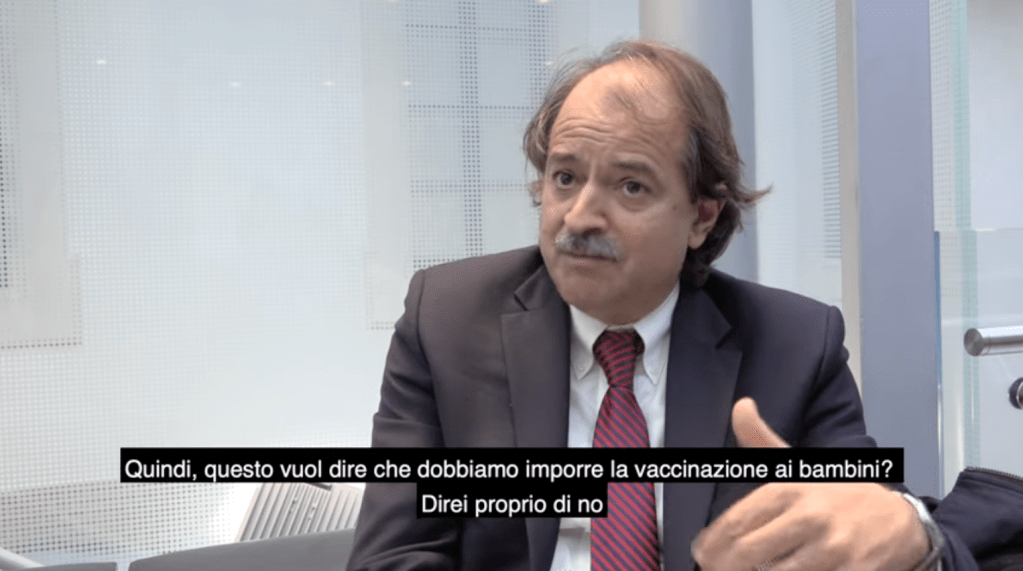
Ecco la prima clip della mia intervista all’epidemiologo statunitense John Ioannidis (top epidemiologo greco-americano, scrittore e professore della Stanford University, che ha contribuito alla medicina basata sull’evidenza e inventore delle “metanalisi”).
Il tema di questo blocco era la vaccinazione ai bambini. In sintesi, secondo Ioannidis attualmente il rapporto rischio/beneficio sembra essere a favore anche per loro, ma abbiamo poche informazioni e gli effetti avversi sono “underreported” e “undercaptured” (che è qualcosa di più di “sottostimati”… ndr). Oltretutto se non ci sarà un’ondata, la vaccinazione non porterà alcun beneficio. Anche le evidenze sui decessi e ricoveri sui bambini sono difficili da distinguere. Dunque per Ioannidis no all’obbligo vaccinale per i bambini, va bene anche se non si vaccinano, almeno si evitano tensioni sociali. Processo decisionale condiviso con i genitori.
Domanda: In ogni discussione scientifica sul Covid, si nota che i dati e l’etica non camminano insieme ma su strade parallele. Ad esempio, nel recente incontro VRBPAC (1) della Fda sui vaccini per i bambini di 5-11 anni, gli esperti sono stati chiamati a votare se “sulla base sull’evidenza scientifica, i benefici del vaccino superano i suoi rischi? Tuttavia l’epidemiologa del CDC Fiona Havers ha presentato non solo dati puri, ma anche considerazioni sull’ “opportunità” di somministrarlo. E anche il professor Arnold Monto, l’epidemiologo che presiedeva il meeting, ha ammonito che, in caso di voto negativo, “molti bambini vulnerabili rimarrebbero senza copertura vaccinale”. Secondo lei, questo è un approccio basato sull’evidenza scientifica? È corretto adottare una decisione sull’opportunità di somministrare un farmaco più che sulla sua sicurezza? Il punto è che, se l’approccio funzionale in questi casi è ammesso, non dovrebbe essere ammesso anche laddove alcuni scienziati dicono che la vaccinazione per i bambini è “inutile”?
Risposta: È una questione molto complicata. Io ho pubblicato, sull’European Journal of Clinical Investigation, un articolo proprio sulla vaccinazione dei bambini e degli studenti universitari. Il mio scopo era descrivere ciò che sappiamo, ciò che non sappiamo, su cosa ancora ci sono dubbi, quali sono i benefici e i danni diretti e cosa ne sappiamo, quali sono i potenziali benefici ed effetti avversi indiretti, perché dobbiamo considerare anche quelli, e in un certo senso possono essere ancora più importanti in termini di numero di morti evitate, ma possono essere validi argomenti da entrambe le parti – questo è vantaggioso, quello è dannoso. Quali sono le considerazioni più importanti a cui sono arrivato? Ho evitato di dire “dovete assolutamente farlo” o “non dovreste mai farlo”, perché penso che bisognerebbe semplicemente dire alle persone quali sono le evidenze scientifiche che abbiamo, cosa sappiamo, e poi arrivare a quello che io chiamo “processo decisionale condiviso”: questo è alla base della medicina basata sulle prove scientifiche. Questo tipo di medicina di solito si pone sempre dei dubbi, e, anzi, direi che il dubbio c’è sempre: ci sono cose che non sappiamo, e anche su ciò che sappiamo abbiamo intervalli di fiducia (termine statistico che indica i margini di attendibilità, ndr) che a volte possono essere piuttosto ampi. Ad esempio, se parliamo di effetti avversi, la miocardite – che è il danno che ci preoccupa di più per quanto riguarda i bambini – è qualcosa su cui abbiamo alcune evidenze, basate sulla segnalazione del VAERS (2) e di altri sistemi di sorveglianza, ma sappiamo anche che questi sistemi di sorveglianza stanno raccogliendo poche informazioni e riferendo poco (“underreporting and undercapturing”) questi problemi. Quindi, la domanda è “qual è il fattore di correzione?”. “Quante volte è necessario aumentarlo per capire il vero rischio assoluto?”. Quindi chiunque dica oggi “io so qual è l’esatto fattore di correzione” probabilmente sta dicendo bugie. Non lo sappiamo, stiamo facendo le ricerche. Lo stesso vale per molti dei danni su abbiamo ancora grandi lacune : sappiamo quanti bambini sono morti, ma quando torniamo indietro vediamo che molti dei bambini etichettati come “morti da Covid-19” o “infezioni da Covid-19”, in realtà avevano altre cose, e forse non sono davvero morti per Covid-19. Insomma, abbiamo difficoltà a distinguere esattamente ciò che è successo e qual è esattamente il beneficio che ci aspettiamo di avere. Abbiamo dubbi sull’intensità della prossima ondata epidemica, quindi se vacciniamo e poi non ci sarà un’ondata epidemica? Nessun bambino sarà coinvolto, quindi non ci sarà alcun beneficio. Viceversa, se abbiamo un’ondata epidemica molto attiva, la storia è molto diversa. Quindi, ci sono tutti questi dubbi ed è importante comunicare con i genitori e dir loro che questo è ciò che sappiamo, piuttosto che provare a decidere “o bianco, o nero”.
Domanda : E le scuole?
Risposta: Io non avrei mai chiuso le scuole.
Domanda: Negli USA alcune università private chiedono la vaccinazione per l’accesso…
Risposta: Non avrei mai chiuso le scuole. Non sono favorevole all’obbligo. Non credo che gli obblighi davvero apportino un miglioramento rispetto all’efficacia a lungo termine delle misure di sanità pubblica. Ottengono alcuni benefici a breve termine, sono utili per chi vuole dimostrare in uno o due mesi che alcuni dati sono migliorati, ma io voglio prendermi cura delle persone, non mi interessano solo i numeri e i dati, mi interessa salvare vite, mi interessa mantenere la coesione sociale, mi interessa che le persone continuino a fidarsi della sanità pubblica e non si sentono oppresse e obbligate nel fare qualcosa. Quindi credo che le scuole dovrebbero rimanere aperte, penso che sia stato un grande errore averle chiuse, già prima di avere i vaccini in realtà; ora che li abbiamo e possiamo contare su altre misure, ancora di meno. Quindi, questo vuol dire che dobbiamo imporre la vaccinazione ai bambini? Direi proprio di no. Penso che se i genitori vogliono vaccinare i propri figli va bene, possono farlo, dovrebbero farlo, ma va altrettanto bene che chi non vuole vaccinare i propri figli non lo faccia. Sono più preoccupato che si creino ancora più tensioni nella società, dato che ci sono già molte tensioni. Porre fine a una pandemia non vuol dire soltanto diminuire il numero di morti e il numero di casi, è altrettanto importante diminuire le tensioni. Se avessimo zero morti, ma continuiamo ad avere animosità, intensità, minacce, odio, divisioni e persone emarginate, sia pure con zero morti restiamo ancora nel bel mezzo di una pandemia, anche se le morti sono scomparse.
(*1) VRBPAC è il Comitato consultivo dei Vaccini della Food and Drug Administration americana
(*2) il VAERS è il programma statunitense per la sicurezza dei vaccini
ENGLISH VERSION
Question: In every scientific discussion on Covid, we can see that data and ethics march in parallel ways. For exemple, in the recent VRBPAC meeting of Fda concerning vaccines to 5-11 years old kids, experts were called to vote on the question if “Basing on EBM , do the vaccine benefits outweighs its risks?”. But The CDC epidemiologist Fiona Havers presented not only pure datas, but also considerations about the “opportunity” to give it. Also the chairman of the meeting, Professor Arnold Monto, warned that in case of negative vote, many vulnerable children would be left without vaccination coverage. Is this approach an EBM approach? It is correct to stake a decision on opportunity more than on safety? If “functional” approach is admitted in these cases, why not admitting it when some scientists say that vaccination for kids is “useless”?
Answer: It’s a very complicated field and I have to say that I have published a paper, in the European Journal of Clinical Investigation, specific on vaccination of children and university students, and my aim was to describe what we know, what we don’t know, how much uncertainty there is, what are the direct benefits and harms, and what we know about them, what ere the potential indirect benefits and harms, because we have to consider those as well, and in a way they may be even more important in terms of number of deaths averted, but can be arguments on both sides – this being beneficial, that being harmful – and what are some bigger considerations? I avoided saying ‘you need to do it’, or ‘you should never do it’, because I think people should be told about what is the evidence, what we know, and then reach what I call “shared decision making”, this is at the base of evidence based medecine. Evidence usually have uncertainty, I would say always has uncertainty: there’s things that we don’t know, or even for things that we know they have some confidence intervals that sometimes can be pretty large. For exemple, if we talk about harms, myocarditis – which is the harm that we are worried about in children – is something that we have some evidence, based on reporting of VAERS and other surveillance system, but we also know that these surveillance systems are underreporting and undercapturing that problem. So, the question is ‘what is the correction factor’, ‘how many times you need to increase that and to understand the real absolute risk’, so anyone who says ‘I know the exact correction’ probably is telling a lie, we don’t know that, we make a speculation. Same things for several of the harms we still have big gaps, I mean, we know how many children died but when we go back we see that many of the children were coined as Covid-19 deaths or Covid-19 infections, actually they have other reasons, and maybe they’re not really Covid-19 deaths, we have a difficult time to separate exactly what happened and exactly what is the benefit that we are expecting to have. We have uncertainty about how big the next epidemic wave will be, so if we vaccinate and if there is not epidemic wave? No children will be affected, then, you know, the benefit is not there. Conversely, if we have a very active epidemic wave it makes a very different story. So, there is all of these uncertainties that it’s important to communicate to parents and tell them ‘this is what we know’, rather than try to reach some kind of black and white decisions.
Question: And to go to school? Many schools ask for vaccination
Answer: I would never close schools. I’m not in favour of mandates. I do not believe that mandates really improve in the long-term compliance with effective public health measures. They achieve some short-term benefits, they’re good for someone who wants to make a claim within a month or two months that some number has improved, but I care about humans, I don’t care about just single numbers, I care about saving lives, I care about maintaining social cohesiveness, I care about people maintaining trust in public health and not feeling that they’re oppressed to do something, so I believe that school should remain open, I think it was a big mistake that we closed them, even before we had vaccines actually; now that we have vaccines and we have other measures even less. So, should that mean that we should mandate the vaccination for children? I don’t think so. I think that if parents want to vaccinate their children that’s beautiful, they can do it, they should do it, those who do not want to vaccinate their children I think that this is equally fine. I’m worried about creating more tension in the society that already has a lot of tension, and ending a pandemic is not just an issue of decreasing the number of deaths and the number of cases, it’s equally important to decrease the tensions. If we’d have zero deaths, but we have animosity, intensity and hate threaten, divisiveness and people being marginalized, with zero deaths we’re still in a middle of a pandemic, even though deaths have disappeared.
* John Ioannidis, h-Index 219, è professore di epidemiologia alla Stanford University e uno degli scienziati più influenti e citati della comunità scientifica internazionale.
INTERVISTA REALIZZATA IL 6 NOVEMBRE 2021 AL FESTIVAL DELLA SCIENZA MEDICA DI BOLOGNA
INTERVISTA, TRADUZIONE E MONTAGGIO DI MADDALENA LOY
RIPRESE DI DANILO MAGLIANO – PharmaStar
 maddalenaloy